Doberman colors explained
Updated November 2026 · By Owego Dobermans
Doberman color is more than looks. Two of the four recognized colors come with a skin condition buyers should understand, and it is very manageable. Some sellers market unusual colors as "rare" to charge more. Here's what you need to know.
The four recognized colors
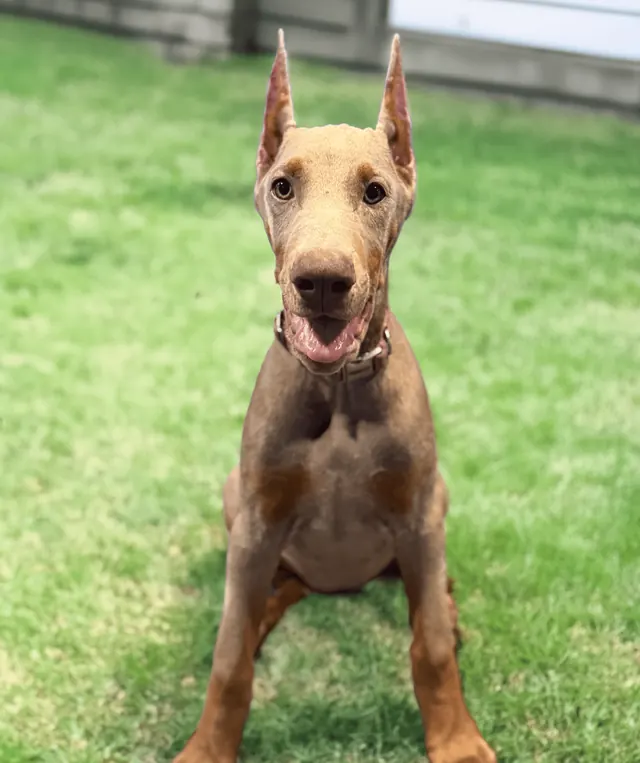
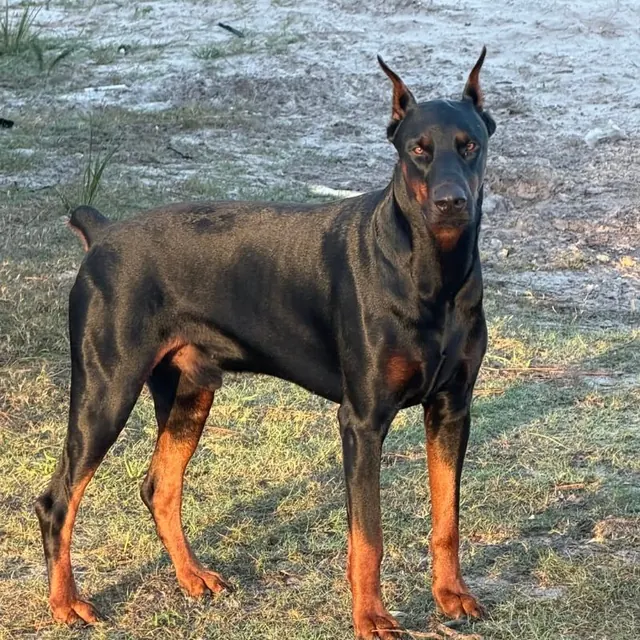
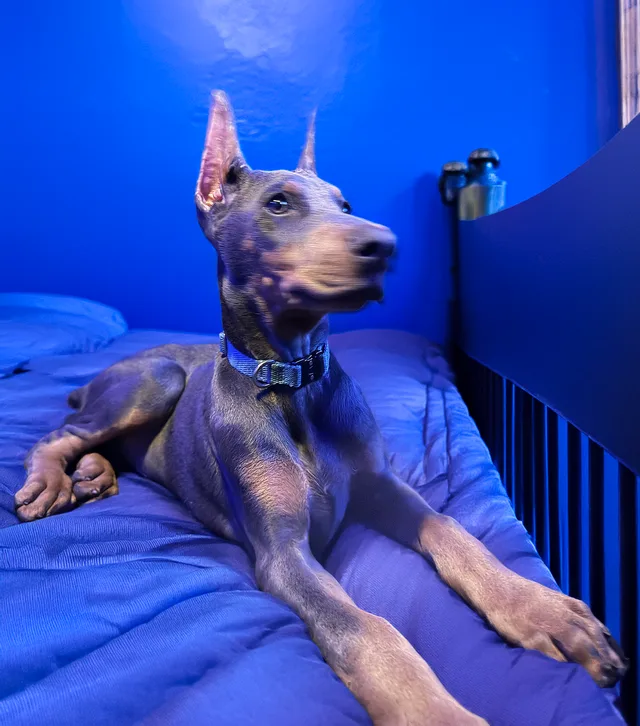
The AKC standard allows black, red, blue and fawn (Isabella), each with sharply defined rust markings above the eyes, on the muzzle, throat, chest, legs, feet and below the tail (AKC).

How color is inherited
Two genes do most of the work:
- Black vs. red. Black is dominant. A red puppy needs a red gene from each parent.
- Dilution. A recessive dilution gene lightens black to blue and red to fawn. A puppy needs a copy from each parent to be blue or fawn.
That's why two black parents can produce red, blue or fawn puppies if both carry the right genes. A DNA test of the parents tells a breeder what colors a litter can include.
The health point: color dilution alopecia
Blue and fawn Dobermans can develop color dilution alopecia (CDA), an inherited condition that causes hair thinning, flaky skin and recurring skin infections in the diluted areas of the coat. It's very common in the breed: one veterinary dermatology text puts it at about 93% of blue and 73% of fawn Dobermans, usually starting between 3 months and 3 years of age (University of Minnesota).
CDA isn't painful in most dogs and doesn't shorten life. It can't be cured, but veterinarians describe it as straightforward to manage, with shampoos, rinses and nutrition that support the skin (VCA Animal Hospitals). Moisturizing shampoos and essential fatty acids help reduce flaky skin, and the main goals are preventing skin infections and protecting thin areas from too much sun (University of Minnesota).
How we care for dilute coats at Owego
- Diet: every dog in our program eats a salmon and potato, all-life-stages food.
- Supplements: each dog also gets an omega fish oil supplement for skin and coat.
- Coat care: we use skin-care shampoos and mousses made for sensitive skin.
A routine like this keeps skin healthy and flare-ups to a minimum. If you're bringing home a blue or fawn puppy from any breeder, ask what routine they use and keep it going at home. Our blue and fawn Doberman guide covers coat care in more detail.
White and "rare" colors
White Dobermans are not a separate color. The Doberman Pinscher Club of America describes them as a form of albinism, with unpigmented skin and eyes, light sensitivity and vision problems (DPCA). If you've seen "WZ" on a Doberman's papers, read what a WZ number means.
Other "rare" colors, such as all-black ("melanistic"), white-marked or merle Dobermans, are either not allowed in the standard or suggest mixed ancestry. A seller charging extra for a rare color is a reason for caution, not excitement.
Does color affect temperament?
No. Coat color has no proven effect on temperament or trainability. Pick a puppy for its parents, health testing and personality, then enjoy whatever color it comes in.
Frequently asked questions
What's the most popular Doberman color?
Black and rust, followed by red and rust.
Are blue Dobermans more expensive?
Some breeders charge more for blue or fawn because they're less common and in demand. Whatever the price, ask the breeder how they care for dilute coats and how older dogs from their lines have done.
Can a red Doberman have black puppies?
Yes, if bred to a black dog. Two red parents can only produce red or fawn puppies.
Is a white chest patch a problem?
A small white patch on the chest, no larger than half a square inch, is allowed by the standard. Larger white markings are a fault.