Bringing your Doberman puppy home
Updated November 2026 · By Owego Dobermans
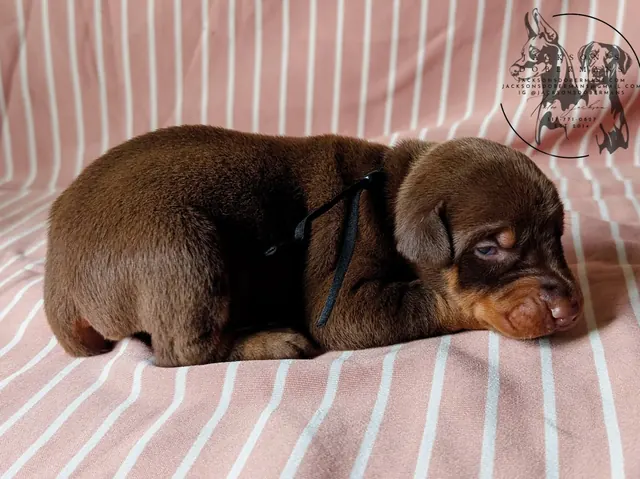
A Doberman puppy is smart, curious and fast-growing. A little preparation makes the first weeks calmer for everyone.
Before pickup: supplies
- Crate: a 42-inch wire crate with a divider, so it grows with the puppy
- Food: the same food the breeder uses, for at least the first couple of weeks
- Bowls: stainless steel food and water bowls
- Collar, ID tag and 6-foot leash
- Chew toys: sturdy rubber toys and safe chews; Dobermans teethe hard
- Bedding: washable and inexpensive at first, since puppies chew
- Enzyme cleaner for accidents
- Grooming basics: nail grinder or clippers, soft brush, ear cleaner
- Ear posting supplies, if your puppy is cropped; ask your breeder or vet what they use
Puppy-proof your home
Get down at puppy height and look around. Move electrical cords, shoes, children's toys, houseplants, medications and cleaning products out of reach. Block stairs and pools. A Doberman puppy will find anything you miss.
The first day
Keep it quiet. Let the puppy explore one or two rooms, take them outside to the same potty spot often, and limit visitors. Expect some crying the first few nights; a crate next to your bed helps. Bring a blanket or toy from the breeder if they offer one.
The first vet visit
Book a visit within the time your breeder's health guarantee requires (often a few days). Bring the puppy's health certificate, vaccine and deworming records, and microchip number. Ask your vet about:
- the rest of the vaccine schedule
- flea, tick and heartworm prevention
- spay or neuter timing for a large breed
- the puppy's vWD status before any surgery
House training
Take the puppy out after waking, eating, drinking and playing, and at least every 1 to 2 hours while awake at first. Go to the same spot, praise quietly when they go, and clean accidents with enzyme cleaner. Most puppies can hold it for about as many hours as their age in months, plus one.
Crate training
Make the crate pleasant: meals, chews and naps happen there. Start with short periods while you're home. A crate is a safe place for a puppy when you can't watch them, not a punishment.
Socialization
Between about 8 and 16 weeks, puppies form lasting impressions of the world. Gently introduce your Doberman to different people, calm vaccinated dogs, car rides, household sounds, grooming and handling. Keep experiences short and positive. Until vaccines are complete, avoid dog parks and high-traffic dog areas; carry the puppy or visit friends' homes instead. A good puppy class is worth it.
Training basics
Dobermans learn quickly and want a job. Start with their name, sit, down, come and walking on a loose leash, in short sessions with food rewards. Teach a calm "off" and gentle mouth early; a 70-pound adult jumping or mouthing is a very different problem from a 15-pound puppy.
Exercise and growth
Puppies need play and short walks, not long runs. Repetitive hard exercise on growing joints can cause injury. Ask your vet when it's safe to start jogging or jumping, often around 12 to 18 months for a large breed. Mental exercise, like training games and food puzzles, tires a Doberman out as well as running does.
Frequently asked questions
When can my Doberman puppy go on walks outside?
Short walks in low-risk areas are usually fine after the first vaccines, but check with your vet. Avoid places where many unknown dogs go until the series is complete.
How much should a Doberman puppy eat?
Follow the food's label for expected adult weight, then adjust so you can feel the ribs easily. Large-breed puppy formulas help control growth.
My puppy bites a lot. Is that normal?
Yes. Redirect to a chew toy, end play briefly if biting continues, and reward gentle behavior. It usually improves a lot after teething, around 6 months.
When do Doberman puppies calm down?
Many settle noticeably around 2 to 3 years old. Daily exercise and training make the puppy stage much easier.