Cropped or natural ears?
Updated November 2026 · By Owego Dobermans
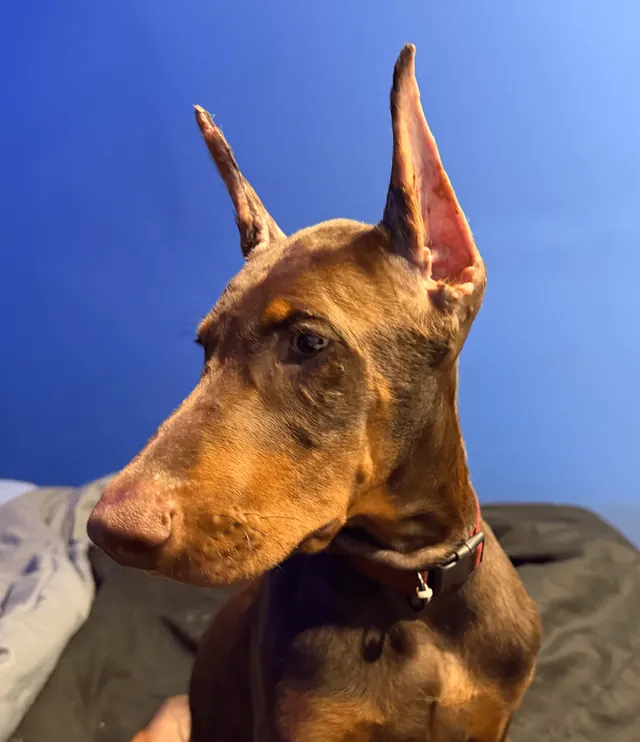
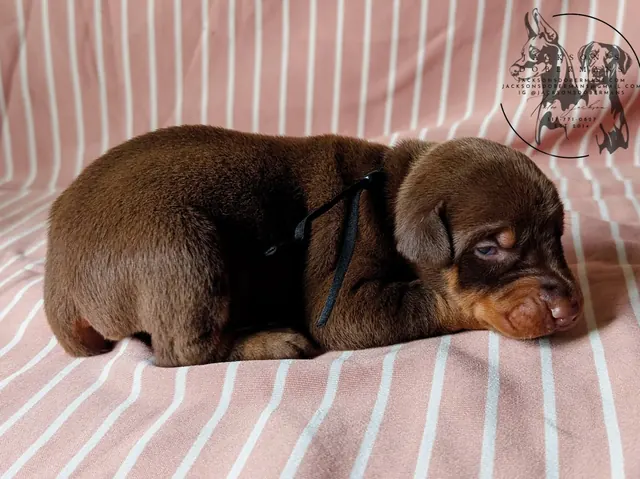
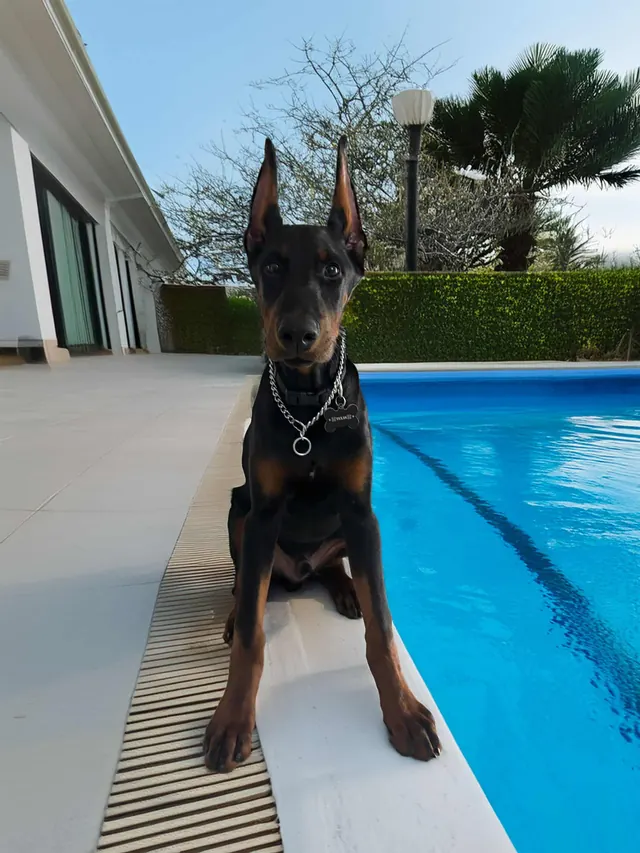
The upright, pointed ears are the most recognizable Doberman feature, but they aren't natural. Dobermans are born with soft, folded ears like a Labrador's. Whether to crop is one of the first decisions you'll make, sometimes before the puppy comes home.
Natural ears
Natural Doberman ears are medium-sized and hang close to the cheek in a neat triangle. They need nothing beyond normal weekly cleaning. Many owners love the softer, friendlier look, and natural ears are now the norm in much of Europe, where cropping is banned in many countries.
What cropping involves
- Surgery. Under general anesthesia, a veterinarian removes the outer part of each ear in a shaped curve and sutures the edges. The Doberman Pinscher Club of America says this is usually done between 7 and 12 weeks of age (DPCA).
- Healing. Sutures come out after about 10 days. The ears are supported on a frame or with tape while the edges heal (DPCA).
- Posting. The ears are taped upright, or "posted," and re-taped every several days. Teething (around 12 weeks to 6 months) often makes ears drop, so posting usually continues through it. Some taping is often needed until 8 or 9 months.
Posting is the part most people underestimate. A good surgical crop can still fail if the ears aren't taped consistently.
Crop styles
- Show crop: long and elegant; needs the longest posting time.
- Medium or standard crop: the most common pet crop.
- Short or military crop: stands faster with less posting; gives a more compact look.
Cost
Cropping cost varies a lot by vet and region, so get a quote before you decide. Posting supplies are inexpensive, but a breeder or vet who does the posting for you will charge for their time. At Owego Dobermans, for example, a puppy is $3,000 with natural ears, $3,800 cropped and $4,000 cropped and posted (Owego pricing).
What veterinarians say
The American Veterinary Medical Association opposes ear cropping when it's done only for cosmetic reasons (AVMA), and hospitals accredited by the American Animal Hospital Association are expected not to perform it without a medical reason (AVMA News). Cropping is still legal in most U.S. states, and many Doberman breeders and owners choose it. You'll want an experienced Doberman cropping vet, and fewer general practices now offer it.
Tails and dewclaws
Doberman tails are usually docked and dewclaws removed when puppies are a few days old, long before they go home. Ask the breeder whether this has been done, because it's not something you can choose later without surgery.
How to decide
Choose natural ears if you'd rather avoid surgery and months of taping, you like the softer look, or you may travel or show in countries where cropping is banned.
Choose cropped ears if you love the classic American Doberman look, you can commit to consistent posting for several months, and you have access to an experienced cropping vet or a breeder who includes it.
Frequently asked questions
Does ear cropping help hearing or prevent infections?
There's no good evidence that cropping prevents ear infections in Dobermans or improves hearing. Most owners choose it for appearance.
Can I crop an older puppy?
It gets harder as the ear cartilage firms up, usually after about 12 to 16 weeks. Most vets prefer to crop well before then.
Will a natural-eared Doberman be less protective?
No. Ears don't affect temperament. A natural-eared Doberman is just as alert and loyal.
Do cropped ears ever fall?
Yes, especially during teething or if posting stops too early. Most can be corrected by going back to taping for a while.