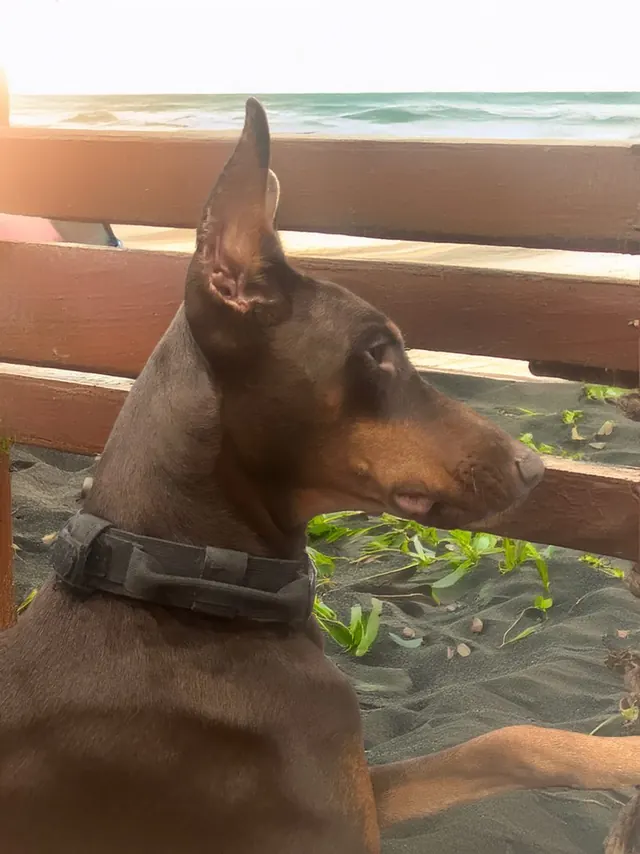
Blue and fawn Dobermans: an honest guide
Updated November 2026 · By Owego Dobermans
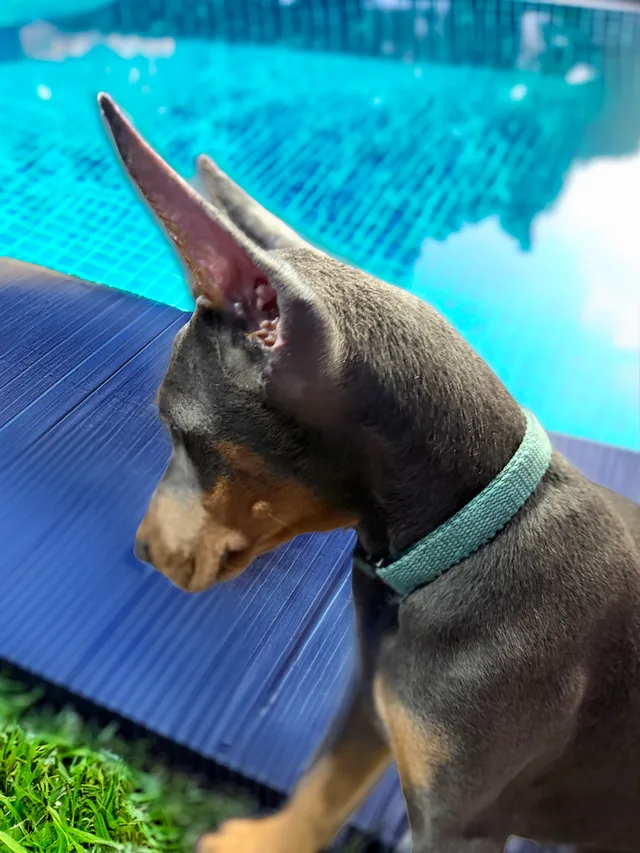
Blue and fawn Dobermans turn heads, and plenty of families want one. You'll also read online that they shouldn't be bred or bought at all. The truth sits in between: these colors come with a well-understood skin condition, and with the right routine it is very manageable. Here's what to know before you bring one home.
What makes a Doberman blue or fawn
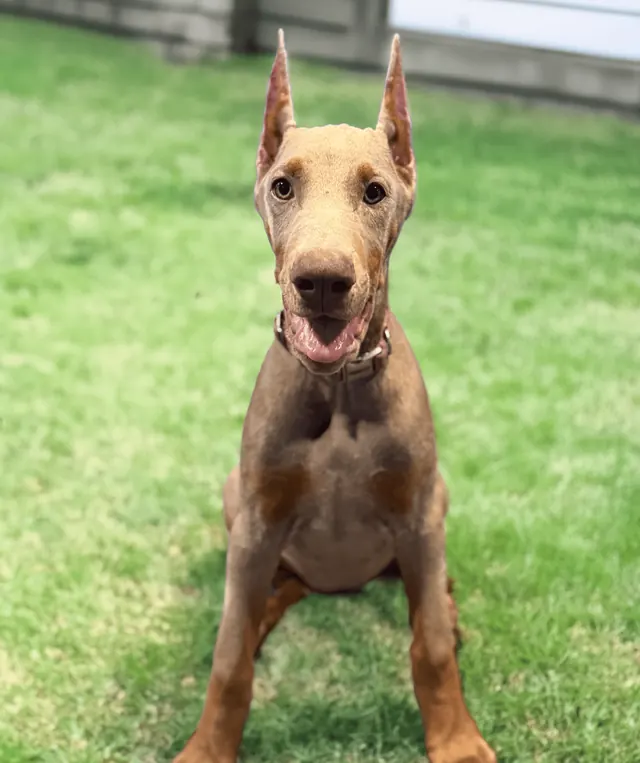
The AKC standard allows four colors: black, red, blue and fawn (Isabella), each with rust markings (AKC). Blue is a diluted black, and fawn is a diluted red. Dilute dogs carry two copies of a recessive color gene (dd), one from each parent, and usually have bluish-gray or lighter noses, lips and eyelids (VCA Animal Hospitals).
Because the gene is recessive, two black or red parents that each carry one copy can produce blue or fawn puppies. A color DNA test of the parents tells a breeder what colors a litter can include.
Color dilution alopecia, honestly
Color dilution alopecia (CDA) is an inherited condition that causes thinning hair and sometimes flaky or itchy skin in the diluted areas of the coat (VCA Animal Hospitals). It's common in the breed: about 93% of blue and 73% of fawn Dobermans develop it, usually between 3 months and 3 years of age (University of Minnesota).
Puppies are born with a normal coat. Thinning usually starts along the back. Some dogs get small bumps or pimples from bacterial skin infections (VCA Animal Hospitals). Lighter dilute dogs tend to show it earlier than darker steel blues, and hair that thins in the diluted areas doesn't grow back (University of Minnesota).
What matters most for a family: veterinarians say that, other than appearance, the dog's overall health isn't at risk, and that while CDA isn't curable, it is straightforward to manage (VCA Animal Hospitals).
How CDA is managed
The veterinary approach is simple. Moisturizing shampoos and essential fatty acids help reduce scaling, and care focuses on preventing skin infections and keeping thin areas out of strong sun (University of Minnesota). Your veterinarian may also recommend shampoos, rinses or ointments, nutrition that supports skin health, and antibiotics if an infection gets more serious (VCA Animal Hospitals).
Our routine at Owego
Every dog in our program, dilute or not, follows the same routine from puppyhood:
- Diet: a salmon and potato, all-life-stages food.
- Supplements: an omega fish oil supplement for skin and coat.
- Coat care: skin-care shampoos and mousses made for sensitive skin.
With this routine, our dogs' skin stays healthy and flare-ups are kept to a minimum. Our blue and fawn puppies go home with the details so you can keep it going.
Keeping it up at home
- Stay on a fish-based or skin-supporting food and a daily omega fish oil.
- Bathe on a regular schedule with a gentle, moisturizing or medicated shampoo. Skip harsh soaps and human shampoos.
- Limit midday sun on thin areas, especially in a hot climate like Florida.
- Check the back and sides during brushing for bumps, pimples or scaly patches.
- See your veterinarian early if you notice an infection or itching.
Questions to ask a breeder of blue or fawn puppies
- How old are the oldest dilute dogs from your lines, and how are their coats?
- What diet, supplements and coat care do you use?
- Can I see the parents' health testing: heart screening, vWD, DCM DNA, hips and eyes?
- Will you be available if I have questions about my puppy's skin later?
A breeder who raises dilutes will be open about CDA and glad to share what works. If a seller tells you blue or fawn dogs never have skin issues, keep asking.
Frequently asked questions
Will every blue or fawn Doberman get CDA?
Not every one, but most do. A veterinary dermatology text puts it at about 93% of blue and 73% of fawn Dobermans. Plan on a skin-care routine for any dilute puppy.
Does the hair grow back?
No. Thinned hair in the diluted areas doesn't regrow. Care focuses on keeping the skin healthy, comfortable and free of infection.
Is CDA painful or contagious?
It isn't contagious, and most dogs aren't bothered by it. Some get itchy or develop skin infections, which your veterinarian can treat.
Do blue and fawn Dobermans have other health problems?
Veterinarians say that apart from appearance, a dog's overall health isn't at risk from CDA. Judge a dilute puppy the way you would any Doberman: the parents' heart, vWD, hip and eye testing, and their temperament.
Are blue and fawn Dobermans recognized by the AKC?
Yes. The AKC standard allows black, red, blue and fawn (Isabella), each with rust markings.